save the date!
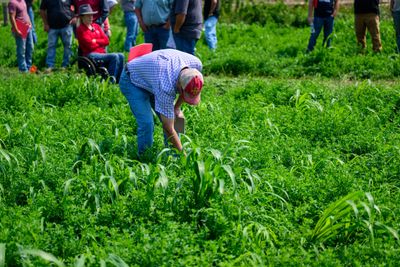
2026 Multi-State Summer Forage Field Day
Date: August 18
Location: University of Minnesota – West Central Research & Outreach Center (46352 MN-329, Morris, MN 56267 Morris, MN)
Time: 9:00 -9:30 a.m. registration
Program: 9:30 a.m. to 3:00 p.m.
This field day will include a combination of classroom and field demonstrations
Topics include:
· Interseeding alfalfa with other crops - Marisol Berti, North Dakota State University
· Show sorghum processors
· Grazing under Solar panels – Brad Heins, Sabrina Florentino, University of Minnesota
· Virtual Fencing – Brad Heins
· In season manure application on forages – Chryseis Modderman, University of Minnesota
· Discussion on cover crops = Shelby Gruss, Iowa State University
· Controlling alfalfa diseases - Deb Samac, USDA ARS
· Controlling alfalfa pests – Anthony Hanson, University of Minnesota
More information will be shared once it become available!
August beef x dairy dialogue webinar announced
The Effects Of Growth Enhancing Technology On Mineral Requirements In DXB Cattle
The I-29 Moo University Beef On Dairy Dialogue Webinar Series continues at 12 noon CDT on Wednesday, August 26 featuring Dr. Dathan Smerchek discussing the effect of growth enhancing technology on mineral requirement in beef cattle.
Trace minerals (TM) are an essential component of the ruminant diet. Although required in small amounts, this component of the diet is vital in supporting and enhancing cattle growth and ensuring the profitability of beef production. Historically, TM requirements were set to prevent deficiencies. These requirements significantly improved growth and reproductive performance. In the United States, the beef cattle industry continues to increase total beef production with a shrinking mature cow herd. From 1977 to 2007, a 44% increase in beef cattle growth rates occurred, and this trend has continued, as evidenced by the consistent, year-on-year increase in hot carcass weight. These improvements in growth and production are achieved through improved cattle genetics, precision nutritional strategies, increased days on feed, and improved use of growth-enhancing technologies. Growth-enhancing technologies such as steroidal implants and beta-adrenergic agonists are valuable tools that significantly improve growth performance, feed efficiency, and lean tissue accretion. Thus, cattle grow faster and more efficiently than ever and to heavier finished weights. Given that many TM requirements were established over 40 years ago, it is important to reevaluate whether these standards still meet the needs of the modern beef animal.
Dr. Dathan Smerchek is an Assistant Professor in Animal Science at Iowa State University, my appointment is primarily research focused. My research program is currently in the early stages of development, but the overall goal of my research program is to foster innovation within the beef industry through science-based approaches to improve precision livestock nutritional and technological management to influence sustainability, productivity, and profitability of the industry.
There is no fee to participate in the webinar; however, registration is required at least one hour prior to the webinar. Register online at:
https://go.iastate.edu/P4ZUFZ

Dr. Dathan Smerchek